

Listen to the article
In today’s “Crypto for Advisors” newsletter, Gregory Mall from Lionsoul Global breaks down crypto yield, highlighting its maturity, along with its role in a portfolio. We look at why yield may ultimately become crypto’s most durable bridge to mainstream portfolios.
Then, in “Ask an Expert,” Kevin Tam highlights key investments from the recent 13F filings, including the news that combined United Arab Emirates sovereign exposure hit $1.08 billion, making them the fourth-largest global holder.
Yield in Digital Assets: What Advisors Should Know as the Market Matures
For most of its history, crypto has been defined by directional bets: buy, hold, and hope the next cycle delivers. But a quieter transformation has been unfolding beneath the surface. As the digital asset ecosystem has matured, one of its most important and misunderstood developments has been the emergence of yield: systematic, programmatic, and increasingly institutional.
The story begins with infrastructure. Bitcoin introduced self-custody and scarcity; Ethereum extended that foundation with smart contracts, turning blockchains into programmable platforms capable of running financial services. Over the past five years, this architecture has given rise to a parallel, transparent credit and trading ecosystem known as decentralized finance (DeFi). While still niche relative to traditional markets, DeFi has grown from under $1 million of total value locked in 2018 to well over $100 billion at peak (DefiLlama). Even after the 2022 downturn, activity has rebounded sharply.
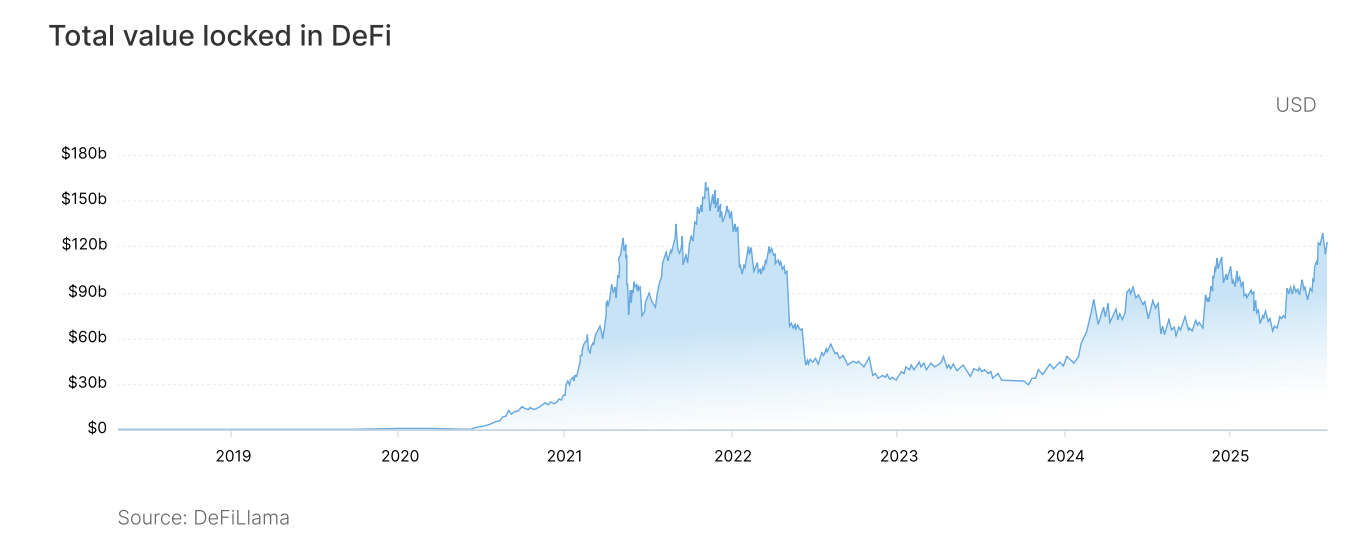
For advisors, this expansion matters because it has unlocked something crypto rarely offered in its early years: cash-flow-based returns, not reliant on speculation. But the complexity behind those yields and the risks beneath the surface require careful navigation.
Where Crypto Yield Comes From
Yield in digital assets does not come from a single source but from three broad categories of market activity.
1. Trading and liquidity provision
Automated market makers (AMMs) generate fees whenever users swap tokens. Liquidity providers earn a share of those fees, similar to market-making spreads in traditional finance. At scale, and in sufficiently deep pools, this can create steady income – though exposure to “impermanent loss” must be monitored.
2. Collateralized lending and rates markets
On-chain protocols allow users to borrow against their assets without intermediaries. Borrowers pay interest; lenders earn it. These dynamics create opportunities for interest-rate arbitrage (borrowing at one rate, lending at another) and for delta-neutral yield strategies when exposures are hedged.
3. Derivatives funding, volatility, and liquidations
Perpetual swap markets generate funding rates that can be captured through market-neutral positioning. Similarly, options vaults and structured payoffs can systematically monetize volatility. Liquidation auctions, where collateral from under-secured loans is sold, also provide opportunities for sophisticated participants.
Importantly, these are not “magic” yields. They arise from economic activity: trading, leverage demand, and liquidity provision.
The Risks Beneath the Surface
Despite its promise, DeFi remains far from plug-and-play for fiduciaries.
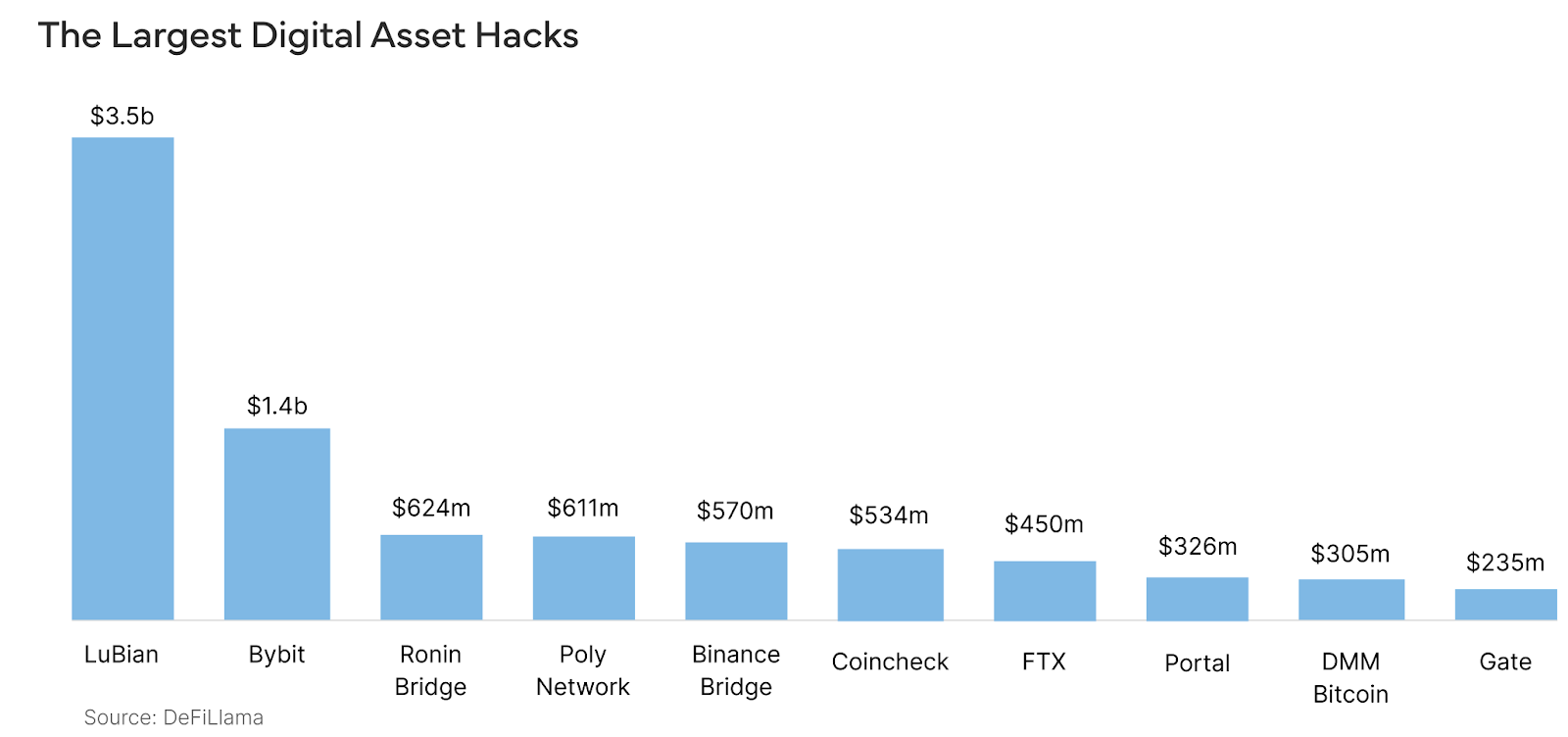
Technical risk remains the most visible. Smart-contract exploits, oracle manipulation, and bridge hacks have collectively accounted for billions in losses. The Ronin Bridge compromise, for example, resulted in one of the largest thefts in crypto history.
Regulatory complexity is equally significant. Most DeFi platforms operate with limited or no “know-your-customer” processes or other anti-money laundering (AML) or sanctions safeguards, making them inaccessible or inappropriate for many wealth-management clients.
And perhaps most overlooked: economic risk. Many DeFi yields remain subsidized by governance-token emissions – attractive but structurally unsustainable. The adage holds true: if you don’t understand where the yield comes from, you are the yield.
What Advisors Should Be Thinking About
1. Demand is shifting from directional exposure to income.
As the asset class matures, many clients want participation without taking high beta.
2. Not all yield is equal.
Token-incentivized returns and economically grounded yield are fundamentally different.
3. Operational due diligence is everything.
Smart contracts may execute autonomously, but the surrounding infrastructure — custody, valuation, compliance, audit – is what makes strategies investable for high-net worth (HNW) and institutional clients.
4. Yield may ultimately become crypto’s bridge to mainstream portfolios.
In the same way money markets underpin traditional finance, transparent and programmatic yield mechanisms may become crypto’s most durable institutional feature.
If you want to read more on yield generation DeFi, visit us for continued reading.
– Gregory Mall, chief investment officer, Lionsoul Global
Ask an Expert
Q: How is Canada’s largest globally systemically important bank investing in bitcoin?
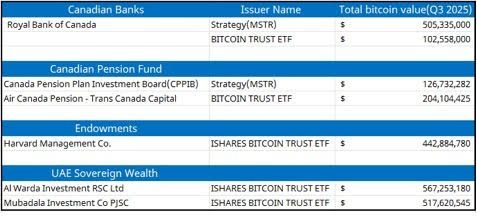
A: Royal Bank of Canada grew its bitcoin exchange-traded product (ETP) position from 35,000 to 1.47 million shares, a 4,104 percent increase, while dollar exposure increased to $102 million, representing an increase of 4,363 percent. Additionally, RBC increased its Strategy (MSTR) share position by 561 percent, taking dollar exposure to $504 million, making it one of the largest Canadian bank bitcoin proxy positions.
Q: Beyond exchange-traded funds (ETFs), how are Canadian institutions engaging with other digital assets?
A: The Canada Pension Plan Investment Board (CPPIB) added 393,322 shares of Strategy (MSTR) valued at $127 million. This marks a milestone as the first major Canadian pension fund to gain bitcoin exposure indirectly through MSTR.
Q: What are notable third-quarter 2025 developments?
A: Harvard University’s endowment expanded its iShares Bitcoin Trust position sharply in Q3 2025, rising from 1.91 million shares to 6.81 million — a 258 percent increase, representing $443 million.
Combined United Arab Emirates sovereign exposure hit $1.08 billion. This is the fourth-largest global holder after U.S. institutions. Al Warda Investment RSC Ltd. significantly expanded its iShares Bitcoin Trust by 230 percent to 7.96 million shares, totaling $518 million. Mubadala Investment Corporation added a new position valued at $567 million.
Looking ahead, expected rate cuts and maturing ETP infrastructure mark the definitive transition of bitcoin from speculative asset to institutional reserve component. The combination of regulatory clarity, sovereign fund deployment, and endowment participation sets up a foundation for sustained institutional adoption.
Sources: SEC filings, Nasdaq, FactSet.
– Kevin Tam, digital asset research specialist
Keep Reading
- Bank of America’s new guidance suggests a one to four percent crypto allocation for wealth clients.
- After refusing crypto access for client’s, Vanguard has reversed its stance and provides access to exchange-traded products.
- BlackRock’s Larry Fink stated he was wrong about bitcoin and now sees its value.
Legal Disclaimer
Information presented, displayed, or otherwise provided is for educational purposes only and should not be construed as investment, legal, or tax advice, or an offer to sell or a solicitation of an offer to buy any interests in a fund or other investment product. Access to the products and services of Lionsoul Global Advisors is subject to eligibility requirements and the definitive terms of documents between potential clients and Lionsoul Global Advisors, as they may be amended from time to time.