



The cryptocurrency market recorded a sharp pullback on December 30, shedding nearly $100 billion in total valuation as Bitcoin retreated from recent highs near $90,000. The decline capped a volatile year-end trading session marked by thin liquidity, institutional repositioning, and renewed macroeconomic caution.
According to reports from the Economic Times, the global crypto market capitalization fell by roughly 2.7% to around $2.96 trillion. Bitcoin dropped more than 2% on the day, trading near $87,000 after failing to sustain a breakout above key resistance. Ethereum also moved lower, hovering around the $2,900 mark, while most major altcoins posted losses ranging from 3% to 8%.
Bitcoin Fails to Hold Above $90K
Bitcoin briefly tested levels above $90,000 earlier in the week but faced consistent selling pressure near that zone. Analysts identified the $90,000–$90,200 range as a dominant supply area, where profit-taking and derivatives-driven selling limited upside momentum.
As of today, Bitcoin is trading near $87,000, reflecting a pullback from recent highs. Price action remained range-bound, with Bitcoin oscillating between the high $80,000s and low $90,000s. Lower trading volumes, typical of the year-end holiday period, amplified intraday volatility and reduced the market’s ability to absorb sell orders.
Market observers noted that the recent pullback did not stem from panic selling. Instead, it reflected tactical positioning as traders and institutions adjusted exposure ahead of the new year.
Institutional Flows Replace Halving Narratives
Recent market behavior highlights a broader shift in Bitcoin’s price drivers. Analysts noted that traditional post-halving narratives now play a smaller role compared with institutional flows, ETF activity, and macroeconomic signals.
As of December 30, 2025, spot Bitcoin ETFs continued to record net outflows, with recent weekly withdrawals approaching $400–$500 million, adding incremental selling pressure to the market. These flows pointed to portfolio rebalancing rather than a loss of long-term confidence, as institutional allocators trimmed exposure amid macro uncertainty and year-end balance-sheet adjustments.
At the same time, Bitcoin futures open interest declined to around eight-month lows, reflecting reduced leverage and cautious positioning among derivatives traders. Lower futures participation limited the market’s ability to sustain rebounds following short-term pullbacks, reinforcing range-bound price action near key resistance levels.
Crypto Treasury Stocks Come Under Pressure
The downturn extended beyond digital assets to equities closely tied to Bitcoin’s performance. Strategy, formerly known as MicroStrategy, saw its shares fall again as Bitcoin weakened. The company, one of the largest corporate holders of Bitcoin, recently sold more than 15 million shares in December to fund additional purchases of the cryptocurrency.
As Bitcoin prices retreated, investors reassessed the risks associated with equity-funded crypto accumulation strategies. Other crypto treasury firms also faced pressure, with analysts warning that the previous positive feedback loop, issuing shares to buy crypto during rising markets, can reverse quickly when prices decline.
Some companies have reportedly shifted toward cash preservation, reduced crypto purchases, or explored alternative capital strategies to stabilize balance sheets.
Broader Market Context Weighs on Sentiment
The late-December pullback erased a portion of the gains recorded earlier in 2025, when Bitcoin rallied to record highs above $120,000. That rally drew support from ETF approvals, institutional adoption, and expectations of accommodative financial conditions.
However, renewed macro uncertainty has weighed on risk assets in recent weeks. Investors responded to mixed economic data, evolving central bank guidance, and geopolitical developments by reducing exposure to volatile assets, including cryptocurrencies.
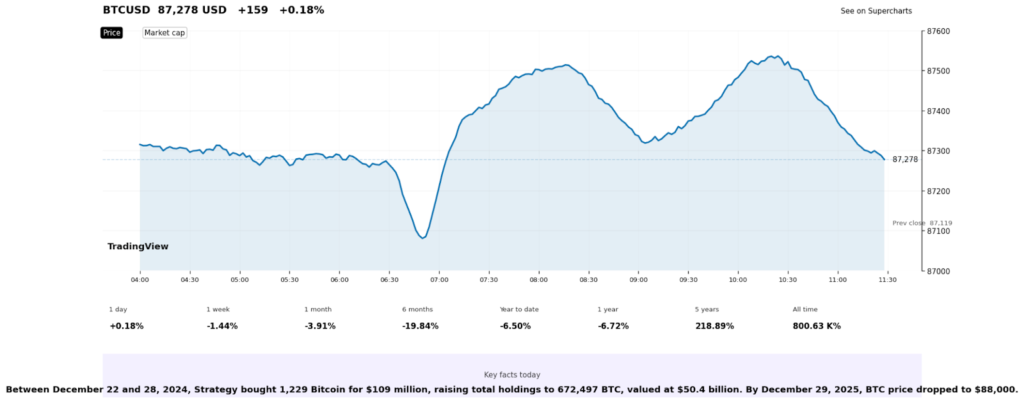
Market participants also pointed to tariff concerns, equity market volatility, and broader risk-off sentiment as contributing factors behind the crypto market’s year-end weakness.
Market Snapshot
- Bitcoin (BTC): Near $87,000
- Ethereum (ETH): Around $2,900
- Total Crypto Market Cap: Approximately $2.96 trillion
- 24-hour Market Change: Down roughly 2.7%
Despite the pullback, long-term industry leaders and institutional figures continue to express confidence in crypto’s structural growth. Analysts emphasized that the current decline reflects consolidation and repositioning rather than a definitive trend reversal.
As liquidity conditions normalize in early 2026, market participants will watch closely for renewed inflows, changes in ETF demand, and signals from global macro markets to determine whether Bitcoin can reclaim the $90,000 level and reestablish upward momentum.
Disclaimer: This article is for informational purposes only and does not constitute financial, investment, or trading advice. Readers should conduct their own research before making any financial decisions.