


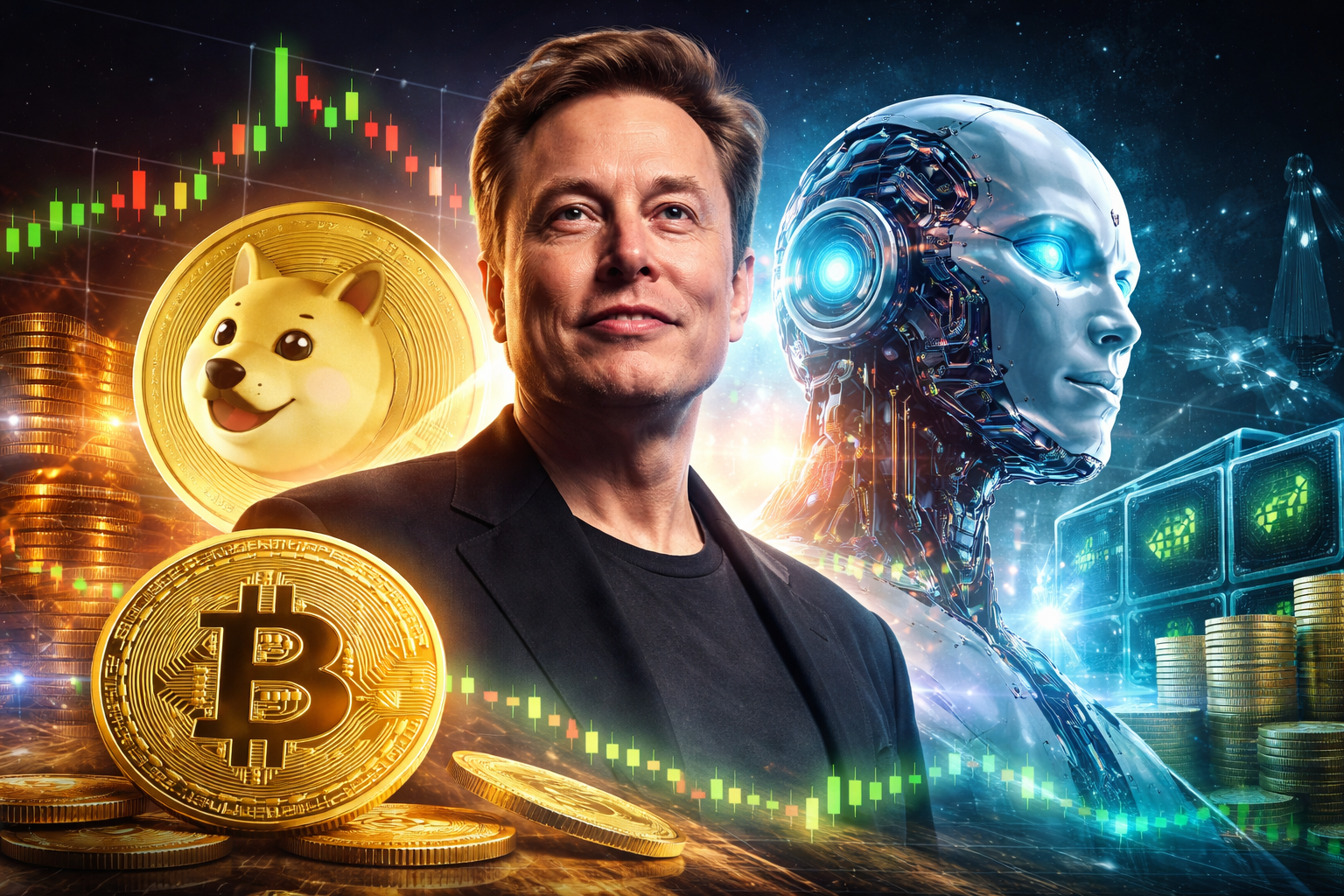
For years, traders have paid close attention to Musk’s posts. Dogecoin’s price, in particular, has reacted repeatedly. Yet the bigger story is not about jokes or short-term price jumps. It is about how Musk’s public commentary often aligns with macroeconomic shifts that shape crypto market cycles.
Why Elon Musk’s Posts Still Matter to Crypto Markets
Elon Musk runs companies involved in electric vehicles, energy, space, and artificial intelligence. These industries are among the first to feel changes in interest rates, labor costs, and supply shortages.
When Musk comments on inflation, productivity, or monetary policy, he is often responding to operational pressure inside capital-intensive businesses. Academic research supports this effect. A study published in the Review of Financial Studies found that statements from high-profile executives can influence market expectations even without direct financial guidance.

Elon Musk shares a meme suggesting Dogecoin could play a dominant role in the global financial system.
Dogecoin as a Case Study: Numbers Tell the Story
Dogecoin is one of the best examples of this pattern.
- On April 14, 2021, Dogecoin’s price soared 20% in the last 24 hours to 32 cents, according to a report from CNBC.
- In October 2022, Dogecoin climbed by more than 70% in one week after Musk completed his acquisition of X, renewing speculation around crypto payments.
These price moves weren’t random. They happened during times when there was more money flowing into markets or when investors were more willing to take risks.
From Asset Mentions to Economic Commentary
At first, Musk’s posts were mostly about specific coins. Over time, his comments changed focus.
Recent posts increasingly touch on:
- High interest rates
- Government spending levels
- Automation and AI as productivity responses
- Pressure on manufacturing margins
These topics are similar to what central banks talk about. The U.S. Federal Reserve has often said that improving productivity is key to lowering inflation without slowing the economy.
When Musk talks about efficiency or rising costs, crypto traders often respond quickly because these issues affect market liquidity before anything else.
Why Crypto Reacts Faster Than Traditional Markets
Crypto markets never close. They are global and mostly driven by speculation.
The Bank for International Settlements has shown that crypto prices respond strongly to changes in global liquidity and financial conditions.
When financial conditions get tougher, investors pull back from risky assets quickly. Crypto shows this change faster than stocks or bonds.
Musk’s posts often show up during these changes. They don’t usually cause stress, but they reflect what’s already happening in the market.
How Traders Can Use These Signals Responsibly
It’s risky to follow posts without thinking. It’s better to use them as part of a bigger picture.
Traders often benefit when they:
- Compare post timing with macro data releases
- Watch tone shifts rather than single phrases
- Confirm sentiment with liquidity metrics
Research from the CFA Institute shows that sentiment indicators improve decision-making only when paired with economic context.
The real value comes from understanding these signals, not just copying them.
Social Platforms as Real-Time Economic Feedback
Public comments now spread right away, and markets react just as fast.
The World Economic Forum has documented how social platforms increasingly influence investor expectations and short-term pricing behavior.
Musk’s influence makes this effect even stronger, especially in crypto, where many regular investors are involved.
Why This Pattern Matters Right Now
Global debt is still high. Interest rates are still tight. Liquidity is harder to find.
The World Bank has warned that tight financial conditions may persist longer than many investors expect.
In these situations, risky assets react early. Dogecoin’s past price jumps during Musk-related events show how market mood and bigger economic forces come together.
Another factor shaping this pattern is how crypto acts as a pressure gauge for risk appetite. When global liquidity expands, crypto prices often rise before equities respond. When liquidity contracts, crypto prices often fall first. According to Glassnode data, large shifts in stablecoin supply have historically preceded major crypto market moves by several weeks. For example, total stablecoin market value declined by more than $20 billion between March and November 2022, a period that coincided with broad crypto price declines across major assets, including Dogecoin.
Musk’s public comments frequently appear during these moments of transition. His remarks on cost control, capital efficiency, or monetary restraint often align with phases when liquidity growth slows. Crypto traders notice that the price responds quickly. Dogecoin’s history reflects this sensitivity. In May 2021, Dogecoin fell from approximately $0.73 to below $0.30 within weeks as broader liquidity conditions tightened and risk appetite cooled across markets.
Turning Public Signals Into Market Awareness
Not every post is important, and not every reaction is based on real fundamentals. Still, when public comments and big economic changes line up again and again, it’s worth paying attention.
For crypto traders, the lesson is straightforward:
Well-known figures can show signs of economic stress before official data does.
Noticing this pattern might be more important than just reacting to price changes.